
Squarespace Where to Add Custom CSS Design Custom CSS 7.1
If your Squarespace website looks good but not quite right, you’re not alone. Many business owners reach a point where built-in design options stop short of what they need. Fonts feel slightly off. Spacing looks uneven. Buttons don’t match the brand exactly. These small issues affect trust, usability, and conversions more than most people realise.
This is where Squarespace where to add custom CSS design custom CSS 7.1 becomes important. Knowing where to place custom CSS and how Squarespace 7.1 handles it can save hours of frustration and prevent design mistakes that are hard to undo later.
Pocketknife focuses purely on understanding the system, the right placement, and smart decision-making. No code examples. No shortcuts. Just clear guidance written for real people building real websites.
Understanding Squarespace 7.1 Before Using Custom CSS
How Squarespace 7.1 works under the hood
Squarespace version 7.1 operates on a single unified framework. Unlike older versions, there are no separate templates with different structures. Every site shares the same base system.
This matters because:
Styling is controlled centrally
Layouts rely heavily on blocks and sections
Custom CSS applies across a shared framework
This consistency is helpful, but it also means careless CSS can affect areas you didn’t intend to change.
What Is Custom CSS 7.1 and When It’s Necessary
A simple explanation
Custom CSS 7.1 refers to user-defined styling rules added on top of Squarespace’s default design system. These rules adjust visual details that cannot be fully controlled through the built-in editor.
Custom CSS is commonly used for:
Precise spacing control
Typography fine-tuning
Navigation adjustments
Button styling consistency
Mobile layout refinements
At Pocketknife, custom CSS is never the first step. It’s applied only when the native tools cannot deliver the required result.
Squarespace Where to Add Custom CSS Design Custom CSS 7.1
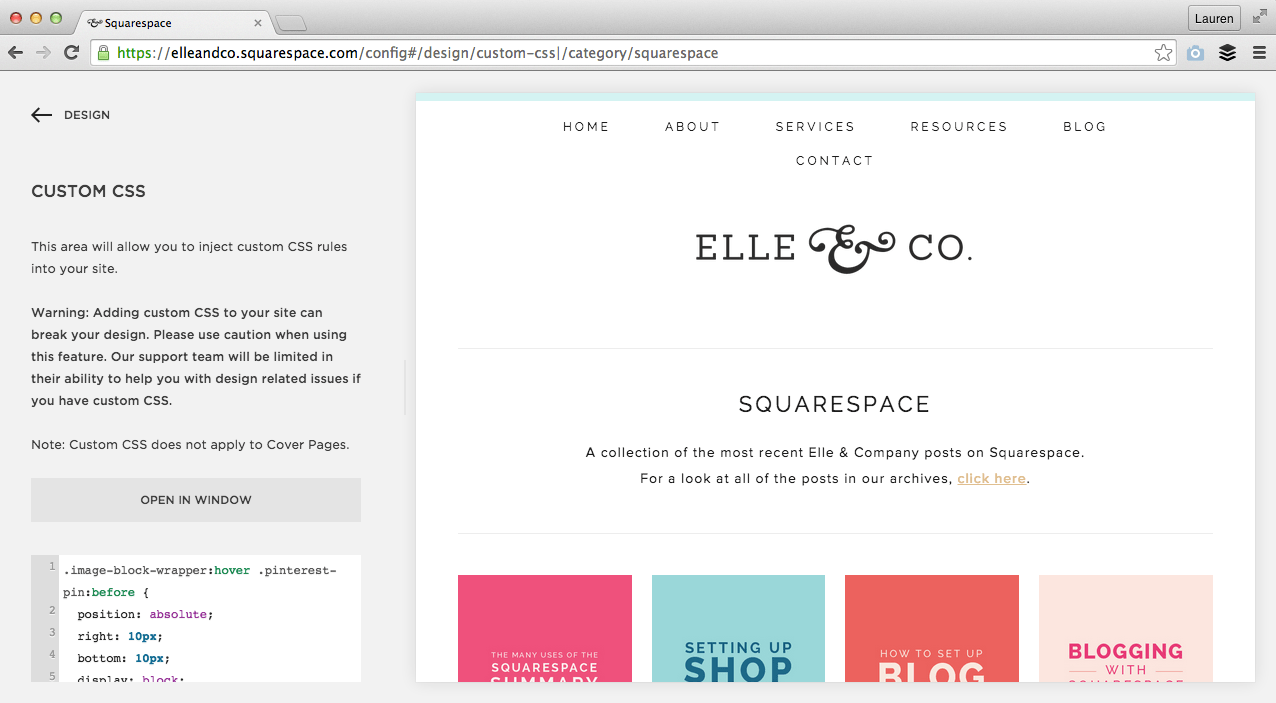
This is the core topic people struggle with. Squarespace 7.1 provides multiple places where CSS can live, but each location serves a different purpose.
Understanding these options avoids conflicts and long-term maintenance issues.
Global Custom CSS: The Primary and Safest Option
Where global custom CSS lives
In Squarespace 7.1, the main location for adding custom CSS is inside the design settings area. This section controls site-wide styling rules.
When people search Squarespace where to add custom CSS 7.1 design custom CSS, this is almost always what they are looking for.
What global custom CSS is best for
Global custom CSS should be used when:
A style applies across multiple pages
Branding consistency is required
Typography needs refinement site-wide
Navigation or footer styling needs adjustment
Why this method is preferred
Global CSS is easier to manage because:
All styling lives in one place
Changes are easier to track
The risk of duplicate rules is lower
Pocketknife uses this method for most projects because it balances control and stability.
Page-Specific Custom CSS in Squarespace 7.1
When global styling is too broad
Sometimes, a design change is only needed on a single page. Common examples include:
Landing pages
Sales funnels
Long-form service pages
Campaign-specific layouts
Squarespace 7.1 does not provide a dedicated page-level CSS editor. Instead, page-specific styling is handled through targeted rules inside the global CSS area.
How page-specific styling works conceptually
Each page in Squarespace has a unique identifier. By narrowing CSS rules to that identifier, styles apply only to the selected page.
This approach is often misunderstood, leading to accidental site-wide changes. Careful targeting is essential.
When to use this approach
Page-specific custom CSS makes sense when:
A page needs a unique layout
Visual emphasis differs from the rest of the site
Testing variations without affecting other pages
At Pocketknife, page-level CSS is always documented clearly to avoid future confusion.
Code Injection: An Advanced and Limited Option
What code injection is meant for
Squarespace includes a code injection area designed primarily for:
Third-party scripts
Analytics tools
Marketing tags
While it can technically hold CSS, this method should be used sparingly.
When CSS in code injection is acceptable
There are limited cases where this approach works well:
Styling tied to an external widget
Temporary testing environments
External stylesheet references
When to avoid it
Code injection should not be used for:
Core layout styling
Navigation or header design
Typography control
Using code injection for basic CSS often leads to conflicts and harder troubleshooting later.
Squarespace Add Custom CSS Design Custom CSS 7.1: Common Real-World Scenarios
Branding consistency issues
Businesses often notice small mismatches between brand guidelines and default Squarespace styles. Custom CSS bridges this gap without redesigning the site.
Mobile layout refinement
Squarespace does a good job with responsive layouts, but mobile spacing sometimes needs manual adjustment. Custom CSS allows subtle refinements without changing desktop design.
Navigation clarity
Navigation spacing, alignment, and visual hierarchy play a major role in usability. Custom CSS can improve clarity without altering structure.
Typography balance
Font weight, line spacing, and letter spacing often need fine-tuning to improve readability, especially on long content pages.
Squarespace 7.1 Add Custom CSS Design Custom CSS: Mistakes to Avoid
Over-styling the site
More CSS does not mean better design. Overuse leads to:
Inconsistent layouts
Harder maintenance
Slower troubleshooting
Good CSS is minimal and purposeful.
Relying on copied snippets
CSS copied from random tutorials may not match the current Squarespace framework. This often causes hidden issues that surface later.
Ignoring future updates
Squarespace updates its system regularly. Clean, scoped CSS survives updates better than broad rules.
CSS vs Built-In Tools
Knowing when CSS is unnecessary
Before adding custom CSS, always review:
Section spacing controls
Block width options
Font size sliders
Color palettes
Many design issues can be solved without CSS.
When CSS becomes essential
Custom squarespace website design often requires CSS when:
Brand guidelines are strict
Layout consistency is critical
Conversion-focused design is required
Pocketknife treats CSS as a finishing tool, not a foundation.
How Pocketknife Uses Custom CSS 7.1 Strategically
A disciplined approach
Pocketknife follows a clear process:
Identify the exact visual issue
Confirm built-in options are insufficient
Apply narrowly scoped CSS
Test on all screen sizes
Document changes for future updates
This reduces risk and keeps sites stable long-term.
SEO, Usability, and Custom CSS
Indirect SEO benefits
While CSS does not directly affect rankings, it influences:
Readability
Mobile usability
Visual clarity
Better user experience often leads to improved engagement metrics.
Risks of poor CSS
Bad CSS can cause:
Layout shifts
Hidden content
Mobile rendering issues
These problems can hurt both users and search visibility.
Maintaining Custom CSS Over Time
Documentation matters
Always keep notes on:
Why CSS was added
What problem it solved
Where it applies
This is especially important for growing businesses.
Periodic reviews
Custom CSS should be reviewed during:
Site redesigns
Content updates
Brand refreshes
Removing unused CSS improves performance and clarity.
Frequently Asked Questions
Where is the best place to add custom CSS in Squarespace 7.1?
In Squarespace 7.1, the most reliable place to add custom CSS is the global Custom CSS panel inside the Design settings. This area is built specifically for styling adjustments and works consistently across the entire website. Adding CSS here ensures your changes remain organised, easier to maintain, and less likely to break during platform updates. It is also the safest option for business websites that rely on long-term stability. At Pocketknife, this is the default location used for most styling work because it keeps all visual rules centralised and avoids conflicts with future edits or third-party tools.
Can I apply custom CSS to only one page in Squarespace 7.1?
Yes, page-specific styling is possible in Squarespace 7.1, but it works differently than many expect. Instead of a dedicated page-level CSS editor, Squarespace uses page identifiers that allow styles to be limited to a single page while still living in the global CSS area. This method requires careful targeting so that styles do not affect other pages unintentionally. Page-specific CSS is useful for landing pages, sales pages, or campaigns that need a unique look. Pocketknife always documents page-level styling clearly to avoid confusion when sites are updated or expanded later.
Is it safe to use code injection for adding CSS in Squarespace?
Code injection can technically hold CSS, but it should not be your primary method for styling a Squarespace 7.1 website. That area was designed mainly for analytics tools, scripts, and third-party integrations. Using it for layout or visual styling can make troubleshooting harder and increase the risk of conflicts. Code injection is best reserved for external widgets or temporary experiments. For long-term design work, global custom CSS is safer and easier to manage. Pocketknife limits CSS in code injection to rare cases where it supports external tools rather than core design.
Will custom CSS break when Squarespace updates its platform?
Custom CSS usually survives Squarespace updates if it is written carefully and scoped correctly. Problems occur when CSS relies on internal system class names or applies overly broad rules that affect core layout elements. Squarespace 7.1 updates are frequent, but they tend to preserve documented styling structures. This is why clean, intentional CSS matters. At Pocketknife, CSS is written with future updates in mind, avoiding fragile selectors and unnecessary overrides. Regular reviews during site updates also help catch issues early before they impact visitors or conversions.
Do I really need custom CSS for a professional Squarespace website?
Not every site requires custom CSS, but many professional websites benefit from it. Squarespace’s built-in tools handle layout and structure well, but custom CSS allows refinement where precision matters. This includes spacing balance, typography rhythm, navigation clarity, and mobile polish. For brands with strict guidelines or conversion-focused goals, these details make a measurable difference. Custom squarespace website design often relies on CSS to create visual consistency and trust without redesigning the entire site. Pocketknife uses CSS selectively, ensuring it supports usability and business goals rather than adding unnecessary complexity.
Final Thoughts
Understanding Squarespace where to add custom CSS design custom CSS 7.1 is about control, not complexity. Squarespace already provides strong design tools. Custom CSS fills the small gaps that make a site feel intentional and professional.
Used carefully, custom CSS 7.1 improves consistency, usability, and brand presence. Used without planning, it creates confusion and technical debt.
At Pocketknife, custom squarespace website design focuses on clarity, restraint, and long-term stability. If your site feels close but unfinished, the right CSS—placed in the right location—may be the final step that brings everything together.
